
Heavy-duty trucks rarely fail without warning, showing signs such as fault codes, unusual temperatures, hard shifts, long regeneration cycles, slow air-pressure buildup, or minor fluid leaks. Addressing these early can reduce repair costs, improve safety, and keep trucks available. Downtime disrupts operations due to mountain grades, weather, rural routes, and long distances. Early diagnostics help prevent small issues from becoming roadside failures.
Why Early Diagnostics Matter
Early truck diagnostics detect developing problems before damage occurs. A diesel truck's network of mechanical, electrical, hydraulic, pneumatic, and emissions components means failure in one system can affect others.
For example, a cooling issue can raise engine and transmission temperatures. Low voltage can interfere with sensor performance. A restricted DPF can trigger power loss or derate conditions. Worn brake components can affect stopping distance and compliance. A structured diagnostic process helps isolate the cause instead of treating only the symptom.
Federal motor carrier rules require commercial motor vehicles to be systematically inspected, repaired, and maintained, and prohibit operating a vehicle in a condition likely to cause an accident or breakdown. That regulatory framework supports the same practical point: early attention protects uptime, equipment, drivers, and everyone else on the road.
The Financial Impact Of Downtime
Downtime costs more than repairs, as a disabled truck can delay deliveries, disrupt jobs, delay customer commitments, increase driver wait times, and require renting equipment. One broken truck can also disrupt dispatch for others.
Repair and maintenance are key operating expenses in trucking. ATRI’s 2024 report shows costs of $0.202 per mile in 2023, with total operating costs at $2.270 per mile. Preventable failures can be costlier than the invoice itself.
Early diagnostics enable scheduling repairs instead of forced ones. Knowing what’s wrong, urgency, and parts needed helps plan routes, workload, and equipment availability.
How Diagnostic Trouble Codes Guide Better Decisions
Modern diesel trucks use electronic control modules to monitor engine, transmission, emissions, and electrical systems. Diagnostic trouble codes are a starting point for faults, but don't replace professional troubleshooting.
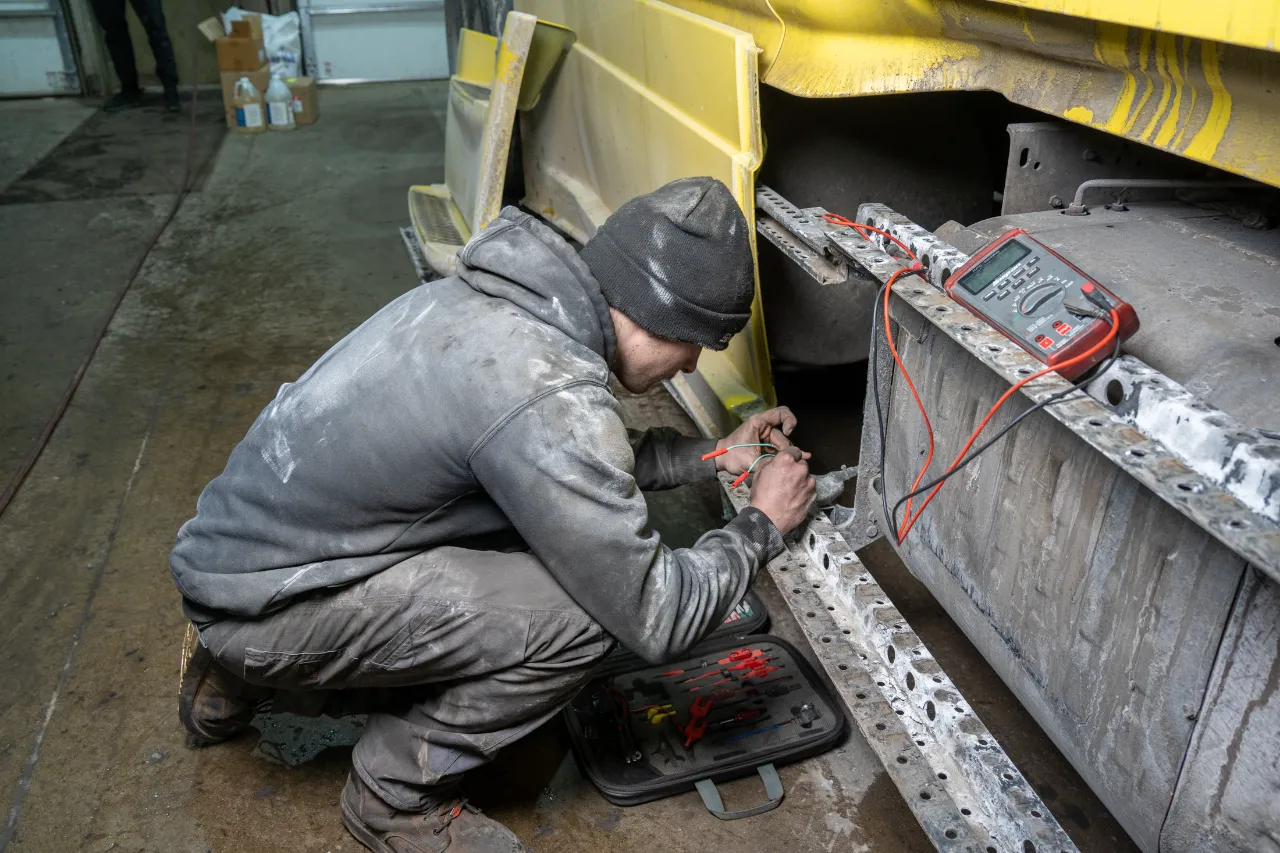
A code can indicate issues such as low fuel pressure, high exhaust temperature, low boost, abnormal coolant temperature, or communication faults. However, causes may involve wiring, sensors, fluid, mechanical wear, contamination, or related systems. Effective ECM diagnostics use fault codes, live data, visual checks, tests, and technician analysis.
This approach avoids unnecessary sensor replacements by confirming failure causes through diagnostics, such as bad voltage, system issues, or other faults, rather than relying solely on code history.
Preventive Maintenance And Diagnostics Work Together
Preventive maintenance keeps trucks on schedule, while diagnostics refine it by indicating what needs attention now, what can be monitored, and what should be repaired before the next demanding route. A strong early diagnostic routine may include:
- Retrieving active, inactive, and pending fault codes
- Reviewing live engine and aftertreatment data
- Inspecting fluid levels and condition
- Checking belts, hoses, batteries, and charging output
- Measuring air system performance
- Inspecting brakes, tires, suspension, and wheel ends
- Checking for leaks, corrosion, and damaged wiring
- Reviewing driver-reported symptoms
This routine helps technicians link driver observations with measurable data. A report of low power may prompt testing of boost pressure, fuel delivery, exhaust restriction, and aftertreatment performance rather than just one component. Preventive maintenance aims to detect issues early, before larger repairs are needed, especially for trucks operating in demanding conditions.
Engine Diagnostics Protect Major Components
Diesel engine diagnostics monitor vital, costly truck components such as oil pressure, coolant temperature, fuel pressure, crankcase pressure, boost, and exhaust temperature. Early detection of issues helps maintain engine health:
- Restricted fuel filters
- Weak batteries or charging issues
- Injector imbalance
- Air intake restrictions
- Turbocharger performance issues
- Coolant leaks
- Low oil pressure
- Abnormal exhaust smoke
- Sensor or wiring faults
Ignore these concerns at your risk. Oil pressure loss damages bearings, overheating causes gasket and engine damage, and fuel issues lead to rough operation, low power, or stalling. Address early to avoid costly repairs.
Cooling System Diagnostics Prevent Heat-Related Failures
A heavy-duty cooling system removes heat from the engine, transmission, and fluids. Coolant carries heat to the radiator, with the fan clutch, radiator, water pump, hoses, thermostat, and reservoir regulating temperature. Engine oil and transmission fluid may also be cooled with dedicated coolers during heavy work.
Coolant system diagnostics are crucial in steep grades, towing, winter, and long idles. Small leaks, loose caps, clogged radiators, failing fan clutches, worn belts, and degraded coolant reduce cooling. Early checks protect the engine and transmission by maintaining proper temperatures, preventing shutdowns, roadside calls, and damage.
Aftertreatment Diagnostics Reduce Derate Risk
The aftertreatment system needs prompt attention; faults can impact drivability. The EPA noted that faults in SCR systems using DEF can cause sudden power loss and shutdowns, affecting diesel vehicle operation.
Early diagnostics identify if soot loading, DEF quality, failed sensors, dosing faults, wiring damage, temperature issues, or engine performance cause the problem. A DPF fault can start with poor combustion, idle, boost leaks, or fuel problems. Cleaning or replacing the filter without addressing the cause risks recurrence.
Transmission Diagnostics Help Avoid Major Repairs
The transmission transfers engine power to the driveline and keeps the truck in the right gear. If shifting becomes harsh, delayed, inconsistent, or causes overheating, transmission diagnostics should be done before resuming heavy work.
Transmission diagnostics include fluid checks, temperature checks, fault retrieval, clutch or torque converter checks, cooler inspection, and road testing. Unattended issues such as low or contaminated fluid, a worn clutch, failing solenoids, and cooler restrictions can worsen over time.
A minor service can prevent larger repairs by catching issues early, such as overheating or damage from slipping, that would otherwise increase repair costs.
Brake Diagnostics Support Safety And Compliance
Air brake systems depend on compressed air, tanks, air lines, chambers, pushrods, slack adjusters, S-cams, shoes, and drums. The brake chamber converts air pressure into pushrod movement, and the slack adjuster transfers that motion to the camshaft, causing the brakes to apply.
A thorough brake system inspection can identify air leaks, worn linings, damaged drums, improper pushrod travel, weak air-pressure recovery, contaminated air systems, and component corrosion. FMCSA brake rules also require qualified brake inspection and maintenance practices for commercial motor vehicles.
Brake issues should never be treated as minor. Early diagnostics protect drivers, reduce the risk of violations, and help prevent conditions that can remove a truck from service.
Driver Reports Make Diagnostics More Effective
Drivers are often the first to notice a change. A formal reporting process helps capture early symptoms before they disappear, worsen, or become difficult to reproduce. Drivers should report:
- Warning lights or repeated fault messages
- Hard starts or slow cranking
- Low power or poor acceleration
- Excessive smoke
- Frequent or failed regens
- Rising coolant temperature
- Unusual vibration or noise
- Air-pressure warnings
- Hard shifting or slipping
- New leaks under the truck
- Burning smells or hot wheel ends
Those details help technicians diagnose faster. A fault code provides data, but driver context explains when the problem occurs, whether the truck is loaded, whether the issue appears on grades, and whether it is intermittent.
The Value Of Mobile Diagnostics
Mobile diesel repair and diagnostics minimize downtime for trucks that can't reach a shop. For fleets, contractors, and owner-operators, on-site diagnostics determine whether a unit can be repaired on-site, driven to a facility, or taken out of service. They are useful for battery and starting issues, fault-code checks, leaks, aftertreatment concerns, and inspections. Mobile diagnostics help fleet managers prioritize repairs without moving all trucks.
Final Thoughts
Heavy-duty truck diagnostics catch issues early, reducing downtime, secondary damage, and improving repair choices. In Jackson Hole, Star Valley, and Alpine, WY, early diagnostics protect schedules, equipment, safety, and budgets. Contact HWorKS Diesel/Moto for expert diagnostics support.